What Is the Farmer Bridge Assistance Program?
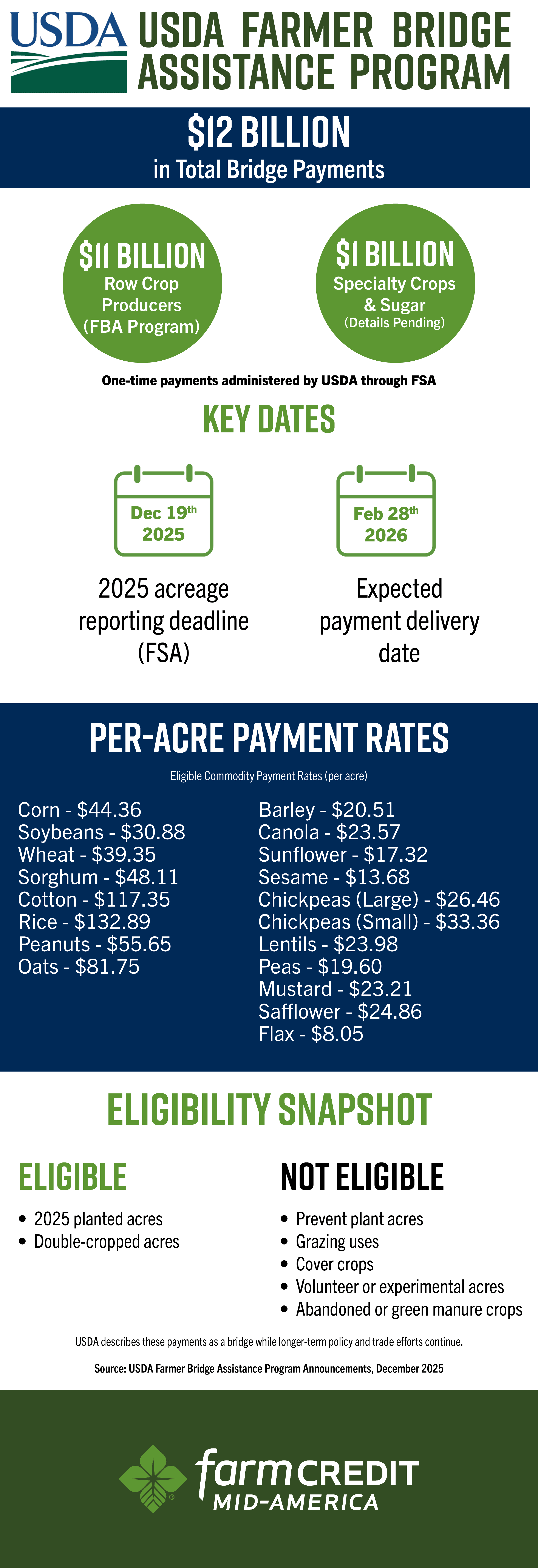
The Farmer Bridge Assistance Program is a one-time payment initiative designed to stabilize farm income during the transition to new farm bill provisions under the One Big Beautiful Bill Act. Its purpose is to bridge the gap until updated ARC and PLC programs take effect later in 2026.
Funding Breakdown
- $11 billion for crops covered under ARC and PLC programs.
- $1 billion for specialty crops (USDA is gathering data; producers should submit comments and documentation of losses).
Eligibility Requirements
To qualify:
- Meet the actively engaged farmer requirement (typically applies to those already participating in USDA FSA programs).
- File and confirm your FSA Form 578 acreage report for the 2025 program year by December 19, 2025.
- Maintain risk in the farming operation as defined by FSA guidelines.
How Payments Are Calculated
Payments are based on per-acre rates for each commodity. USDA has published a schedule of payment rates on the FSA website.
Calculation Steps
- Identify reported acres for each commodity on your FSA Form 578.
- Multiply acreage by the commodity’s payment rate.
- Sum totals across all commodities for your final payment.
Use USDA’s online payment calculator for estimates.
Payment Limitations
- $155,000 cap per entity (separate from other USDA program limits).
- Adjusted gross income (AGI) restrictions apply.
- Partnerships and joint ventures have limits calculated at the member level.
Strategic Use of Funds
Receiving a lump-sum payment offers flexibility, but how you use it matters. Here are five smart strategies:
1. Pay Down Operating Debt
Reduce carryover balances from previous crop losses to free up your line of credit for the 2026 season.
2. Target Short-Term Liabilities
Short-term loans often have higher interest rates and larger payments. Paying these down improves cash flow.
3. Address High-Interest Loans
Reducing high-interest term debt lowers overall interest expenses.
4. Build Working Capital
Maintain a cash reserve for unexpected expenses or family living needs.
5. Invest in Critical Assets
If essential equipment or infrastructure upgrades are needed, allocate funds strategically to improve efficiency.
Watch the recording below of our recent webinar to learn more about the USDA Farmer Bridge Assistance Program.