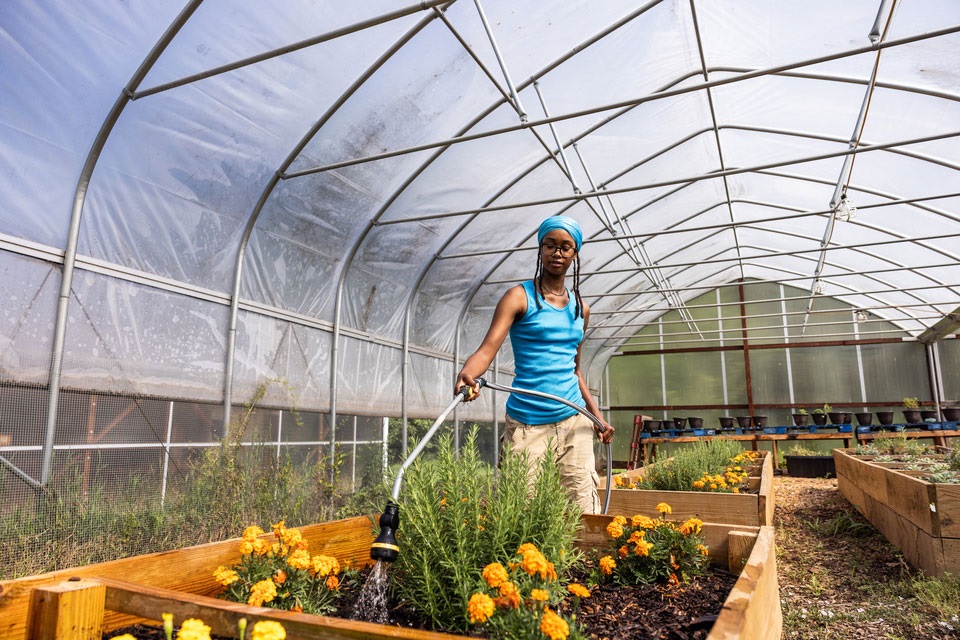
Starting a farm doesn’t always require hundreds or thousands of acres or large-scale production. Across the country, small farms and microfarms are proving that with the right strategy a small amount of land can become profitable. In fact, according to the USDA Economic Research Service, approximately 86% of U.S. farms are considered small-scale operations.
What Makes a Microfarm Successful?
Microfarmers are often intentional about how they use their resources, market their products and grow their operations. One of the biggest advantages microfarmers have is their ability to sell directly to consumers. Farmers markets, community-supported agriculture programs and local restaurant partnerships can help growers capture higher profit margins while building relationships with customers. Farms located near urban and suburban areas often benefit from strong demand for fresh, locally produced food.
Many of these farmers also maximize production on limited acreage. Techniques such as vertical growing systems, intensive planting methods and no-till bed systems allow farmers to increase yields while improving soil health and reducing equipment costs. Season extension can also play an important role. Greenhouses and high tunnels help products reach the market earlier in the spring and continue growth later into the fall. Did you know that USDA conservation programs, including the Natural Resources Conservation Service (NRCS) Environmental Quality Incentives Program (EQIP), may help eligible producers offset a portion of the upfront cost of installing high tunnels and other season-extension structures? Additional state and local conservation programs may also be available depending on your location.
Common Misconceptions About Microfarm Financing
While financing options exist for small-scale operations, misconceptions can sometimes prevent beginning farmers from pursuing opportunities. One common misunderstanding is that microloans are quick and easy to obtain. Some applicants might assume, based on the loan name, that the process is similar to applying for an online personal loan. In reality, microloan programs are often competitive and require thoughtful preparation.
You may need to demonstrate:
- Acceptable personal credit history
- Verifiable farm or business management experience
- An inability to obtain credit elsewhere
Another misconception is that any traditional lender will understand the business model of a microfarm. Many lenders are more familiar with larger commodity-based operations and may not immediately recognize the economics of a high-yield market garden or specialty crop enterprise. Working with an agricultural lender, like Farm Credit Mid-America, who understands diverse farming operations can make a significant difference.
A Case Study in Adapting
For aspiring farmers with limited capital, the first investment may not be land or equipment. Instead, it may be building the skills, relationships and knowledge needed to take advantage of future opportunities. You can read how to prepare for a first-time farmer loan here.
One particular grower bypassed traditional outdoor farming entirely. Instead, they created a climate-controlled growing space inside a small structure and focused on mushroom production. Using hanging bags and vertical racks, they were able to pack the equivalent of a much larger growing area into a very small footprint. They sourced much of their equipment at little to no cost from local woodshops and cafés. What made them especially successful was their ability to adapt. Unsold mushrooms were dried and turned into powdered seasoning products, creating a higher-value product with a longer shelf life and less waste.
The Bottom Line
Small farms and microfarms can be successful agricultural businesses when built on a solid plan and a clear understanding of market opportunities. By investing in your skills, strengthening your business strategy and building industry connections, you can position yourself for long-term success. Ready to move forward? Learn how Farm Credit Mid-America supports beginning farmers as you turn your goals into reality by applying today.