For some students, the last school bell on a Friday afternoon also marks the start of a different kind of uncertainty: when their next meal will be available.
School meals provide consistency throughout the week. Weekends and summer break can leave a gap, and for some families, this gap creates a need to seek resources in combating food insecurity. In north Arkansas, school districts work to meet that need in a number of ways. Some send backpacks of food home each week, some provide meals at school, while others deliver food to students during summer break.
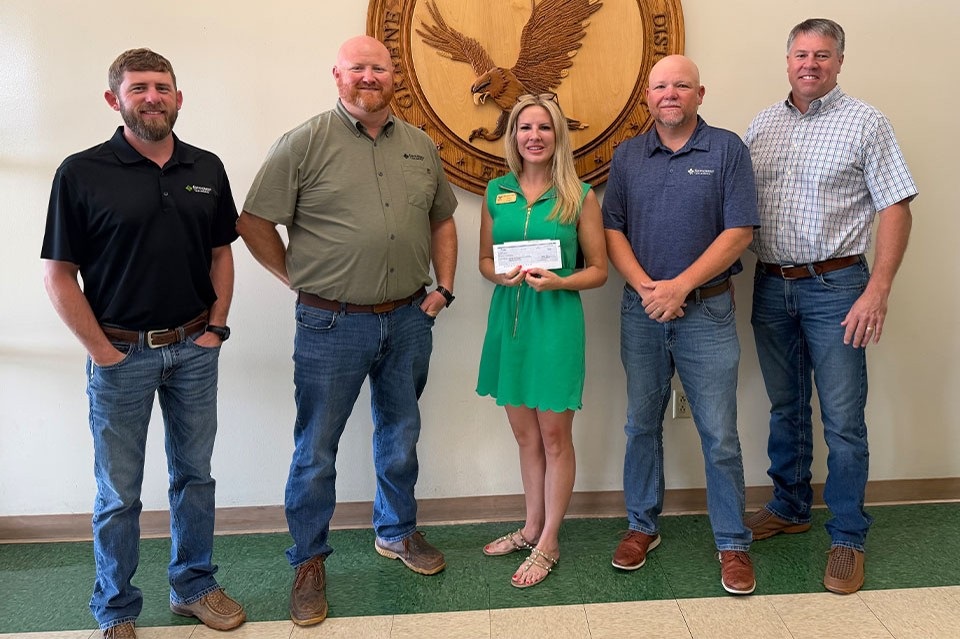
To help combat child hunger and further their cooperative purpose, Farm Credit Mid-America’s North Arkansas and Missouri Local Community Investment Committee invested $11,500 to support backpack and hunger programs across 23 north Arkansas school districts. Each district received $500 to direct towards the approach that best fit its students.
Listening Before Investing
The idea started with local team members reaching out to school districts one by one. There was no single contact or one program model. The committee gathered information from each district, built a contact list and worked to get funds to schools before the various summer programs began.
“Each district does it differently and funds it differently,” said Justin Ladd, senior financial officer for Farm Credit Mid-America and chair of the local committee. “Some take food to these kids once a month, some have lunch at school that kids can come up and eat and some continue to send home food once a week.”
That flexibility mattered. Justin shared several districts could not operate a summer program, but the committee still wanted the investment to help those schools prepare for the next academic year.
A Story Close to Home
Check presentations and school visits across the community also gave team members a closer look at why this work matters to local school leaders. After one visit, Rob Taylor, senior financial officer for Farm Credit Mid-America and a local committee member, pointed to a conversation with one staff member as the interaction that stood out most.
Growing up, the individual’s parents did the best they could to keep him and his siblings fed; they’d dig through grocery store dumpsters to get food the store threw out that was close to expiring or expired. One day, the grocery store owner saw their family and from then on would leave food at the backdoor. The staff member never forgot that kindness, so when he came to Arkansas, he wanted to beef up what their school district did to help students in similar situations.
Hearing their story, the local investment team saw first-hand how hunger can be an invisible wound. Seeing an individual you’d never expect hunger insecurity to have impacted or was important to them.
The Local Work Behind a Larger Commitment
The north Arkansas investment is one part of Farm Credit Mid-America’s wider work to help feed communities; including those where team members live and work. Many volunteer time and resources with local food partners. The customer-owned cooperative also supports or hosts a variety of initiatives combating hunger including:
- Farms to Food Banks across their six-state territory.
- Fight the Hunger, Stock the Trailer in Indiana and Ohio.
- Shooting Hunger in East, Middle and West Tennessee.
Noted in the Farm Credit Mid-America 2025 Impact Report, the Association helped provide 1.8 million meals during 2025 to local communities. Farms to Food Banks, a program where produce is collected from customer-owners’ operations and donated to local food banks, having supplemented more than 4.4 million meals since 2016. The signature event Fight the Hunger, Stock the Trailer, a unique initiative that brings together junior fairs across Ohio and Indiana in a friendly competition to collect food donations for local food banks, has collected and donated 1.6 million pounds of food over the last five years.
“Support at a large-scale matters, with this Arkansas effort displaying how that commitment becomes useful locally and how combating food insecurity occurs at every level,” shared Hannah Walker, community investment manager for Farm Credit Mid-America.
Hunger Action Month and Cooperative Purpose
Food insecurity reaches every part of the country, whether in urban or rural America. According to the U.S. Department of Agriculture, 18.4% of U.S. households with children experienced food insecurity at some point during 2024. Feeding America’s 2026 Map the Meal Gap report, which uses 2024 data, found that more than 8 in 10 counties with the highest food insecurity rates are rural.
In a state where one in five children face food insecurity statewide, a local investment may not appear impactful, but across 23 districts, each adds to a shared commitment: helping students return to class ready to learn, grow and take part in their community.
For Farm Credit Mid-America, supporting that work is a critical part of their purpose in securing the future of rural communities and agriculture® and its responsibility as a cooperative to give back to the communities it serves.
Learn more about how our team at Farm Credit Mid-America is helping feed communities across our territory.